
Learn everything you need to know about Zoloft (sertraline) withdrawal, timelines for symptoms, and how to taper it safely.
sertraline
25 to 200 mg
Moderate half-life
Selective serotonin reuptake inhibitor (SSRI)

Bryan Shapiro, MD
The information provided on this page is for educational and informational purposes only and is not intended as medical advice. It should not be used to diagnose, treat, cure, or prevent any medical condition. Always seek the guidance of a qualified healthcare professional with any questions you may have regarding your health, medical condition, or treatment. Never disregard professional medical advice or delay in seeking it because of something you have read here.If you are experiencing a medical emergency, please call 911 (or your local emergency number) immediately.
Weaning off Zoloft isn’t as simple as your doctor might have suggested. Research shows that over half of people discontinuing antidepressants experience withdrawal symptoms, with nearly half describing them as severe. The standard approach of rapid tapering over just weeks often leads to months-long withdrawal that could be avoided.
Every person’s brain adapts differently to these medications, meaning your tapering journey requires a personalized approach based on factors like treatment duration, current dose, and individual response. With evidence-based hyperbolic tapering methods and proper support, you can safely navigate discontinuation while minimizing withdrawal symptoms.
How do I wean off Zoloft?
The development of a taper plan for Zoloft should be personalized, based on factors like duration of use, current dosage, and overall health status. A typical approach involves gradual dose reductions over time, following the hyperbolic curve, with periods of dose stability to allow for physiological adjustment.
What is hyperbolic tapering?
Hyperbolic tapering (sometimes called the Horowitz-Taylor method) is based on the fact that as antidepressant dose goes up, drug action on brain cells increases, but not in equal steps, higher dosages having less and less additional influence – a decreasing return on investment. The graph showing this is called a hyperbolic curve (goes up faster at low doses and flatter at higher doses).
Tapering based on this method gradually backs you out of the drug with reductions following this natural curve, with the size of dose reduction getting smaller as the dosage gets lower. As very low doses (e.g. 1 or 2mg) have much larger effects than people expect, many people need to taper down to very small doses before stopping so that the final ‘jump’ to zero is not too large a shock to the nervous system.
Can I stop Zoloft cold turkey?
Stopping Zoloft abruptly is not recommended. In fact, based on the science, it is recommended to taper to daily doses lower than what are typically available. When a medication is taken for months or years, the body adapts to its presence. Sudden removal can lead to withdrawal symptoms, which can be acute or protracted (long-term) in nature.
How do compounded medications work?
Compounded medications are often crucial in the tapering process, as commonly available dose sizes aren’t small enough to reach the sizes necessary to follow a safe tapering plan. For example, the smallest available dose size for a medication like venlafaxine, as an example, is 37.5mg (a drop from 37.5mg to 0mg can easily lead to debilitating withdrawal symptoms).
Book a visit with a clinician trained in evidence-based tapering.
What is antidepressant discontinuation syndrome?
Antidepressant discontinuation syndrome (ADS) refers to a set of physical and psychological symptoms that can occur when stopping or reducing antidepressants. Common symptoms include dizziness, brain zaps, flu-like feelings, mood changes, and sleep disturbances. These symptoms result from the brain readjusting to the absence of the medication after physiological adaptations during treatment. ADS is a medical term for withdrawal syndromes, and some argue that the term was created to downplay the dependency caused by antidepressant medications.
Why does withdrawal from Zoloft happen?
Withdrawal symptoms from antidepressant medications like Zoloft happen because the brain adapts to the drug overtime. While historically underrecognized in clinical practice, the common nature of withdrawal symptoms is increasingly accepted. In order to safely stop a medication like Zoloft, it’s recommended to work with a clinician trained in deprescribing.
How long can Zoloft withdrawal last?
The duration of sertraline (sertraline) withdrawal symptoms varies by individual, based on several criteria. Generally speaking, the longer one uses a medication the greater the risk for severe and extended withdrawal symptoms. Traditional studies, based on people using antidepressants for only 6-8 weeks, suggest that withdrawal symptoms last only days or weeks. New data suggest that withdrawal symptoms can last for months or years. Tapering medications like Zoloft more slowly and at a personalized pace can reduce the risk of severe and long-lasting withdrawal symptoms.
How can I distinguish withdrawal symptoms from a relapse?
Withdrawal symptoms typically start within days to weeks of stopping medication, includes distinctive physical symptoms (dizziness, brain zaps, sensory changes), and resolves quickly when medication is resumed. Relapse usually begins weeks to months later and responds more slowly to the reinstatement of medications. Withdrawal often feels “nothing like my original condition” and may include symptoms you never experienced before starting antidepressants. However, anxiety and low mood are common withdrawal symptoms and the onset of withdrawal symptoms can be delayed, due to the time it takes for downstream symptoms from medication removal to manifest.
What are the common side effects from Zoloft?
Sertraline can produce side effects that vary in occurrence and severity among individuals. Common side effects may include headache, nausea, dry mouth, diarrhea, loss of appetite, indigestion, sleepiness, dizziness, insomnia, nervousnesss, agitation, tremor, increased sweating, and sexual dysfunction.
What are Zoloft’s long-term risks?
When used long-term, Zoloft can increase the risk of metabolic dysfunction (e.g., weight gain, diabetes), cognitive impairment, decreased bone density, gastrointestinal issues, an increased risk of bleeding, and hyponatremia. In pregnant women, Zoloft increases the risk of neonatal adaptation syndrome and adverse fetal development, such as low birth weight, preterm birth, and pulmonary hypertension in the newborn
Many antidepressants like Zoloft (sertraline) are associated with various long-term adverse effects. These include persistent sexual dysfunction, weight gain, metabolic changes and cardiovascular risks. Long-term risk has also been associated with cognitive dysfunction and gastrointestinal issues. Some studies suggest a possible link between long-term antidepressant use and dementia and/or cognitive decline.
What is the half-life of Zoloft?
The half-life of a medication is relevant to understanding its effects and potential withdrawal symptoms. Sertraline has a half-life of approximately 26 hours.
Book a visit with a clinician trained in evidence-based tapering.
Hyperbolic tapering is the only science-based discontinuation method, based on the neuroscience of how dose changes impact withdrawal symptoms.
Work with a healthcare provider knowledgable in the latest tapering practices, and seek additional support from peers, friends or family.
When getting to dose sizes smaller than what are usually available, compounding pharmacies can help formulate custom pills and liquids.
The hyperbolic tapering method is a groundbreaking approach to safely and effectively help individuals get off medications like Zoloft (sertraline). Unlike traditional tapering methods, hyperbolic tapering takes into account neuroscience and the unique needs of each individual, allowing for a more personalized approach that reduces the risk of Zoloft withdrawal symptoms.

The development of a taper plan for Zoloft (sertraline) should be personalized, based on factors like duration of use, current dosage, and overall health status. A typical approach involves gradual dose reductions over time, following the hyperbolic curve, with periods of dose stability to allow for physiological adjustment.
A science-based approach that helps reduce the risk of withdrawal symptoms and relapse.
Outro clinicians are trained by world-leading experts in medication deprescribing.
Outro's interdisciplinary team of clinicians, researchers and patient advocates is dedicated to building safe, evidence-based options for people looking to live life free of medications.


Explore commonly asked questions about Outro's services, medication withdrawal, tapering and more.
Outro provides flexible, medically-supervised tapering plan with gradual dose reductions tailored just for you. Our hyperbolic tapering method, where reductions become progressively smaller, gently minimizes nervous system disruption and withdrawal discomfort. We personalize your tapering plan based on your response, preferences, and what's happening in your life.
Safe antidepressant deprescribing requires a comprehensive approach that is often difficult for an individual prescriber to provide due to the time required. It also requires up-to-date knowledge on the latest techniques in tapering antidepressants that are not yet widely taught in the United States. Think of Outro as a specialist in tapering.
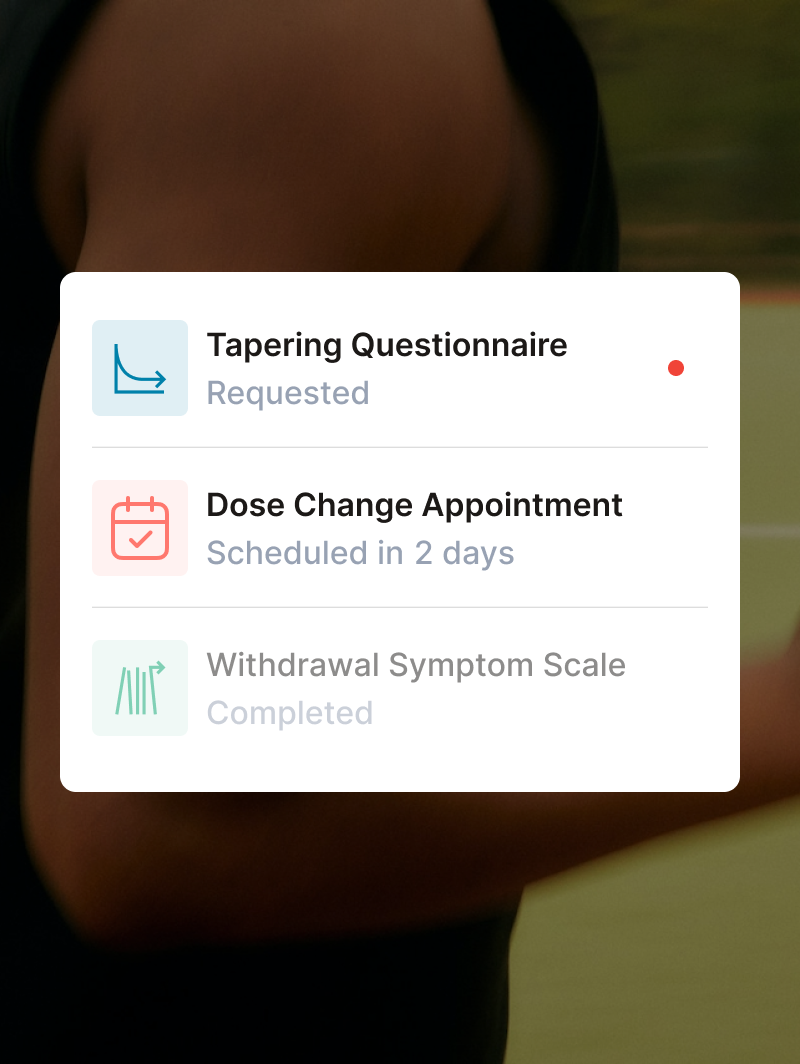
At Outro, we walk with you every step of the way. Our specialized, high-touch care team takes time to get to know you and your goals, and provides an advanced, individualized approach to tapering off antidepressants informed by the latest guidance and clinical evidence. Through Outro’s app, your symptoms and progress are continuously monitored by your provider, who can reach out to offer coping strategies or adapt your care plan accordingly. If you have questions or concerns that arise in between appointments, your Outro provider is available via 1-to-1 chat.
Many people have difficulties when they try to go off antidepressants. Our team of expertly trained clinicians will develop a tailored tapering program, informed by the latest scientific evidence and designed to minimize withdrawal effects - even for these people who have tried to stop before.
We currently offer taper management for antidepressant medications (e.g., duloxetine, escitalopram, sertraline, venlafaxine). You can see the full list here.
We are making preparations to expand to other psychotropic medications like benzodiazepines and gabapentinoids, which also follow the hyperbolic tapering method. You can express an interest in tapering these medications in our sign-up form.